
Websites Now Take Hours. Because the thinking and research has been done.
A good small business website now takes hours to build. The thinking still takes weeks. Here is the evidence that makes the difference.
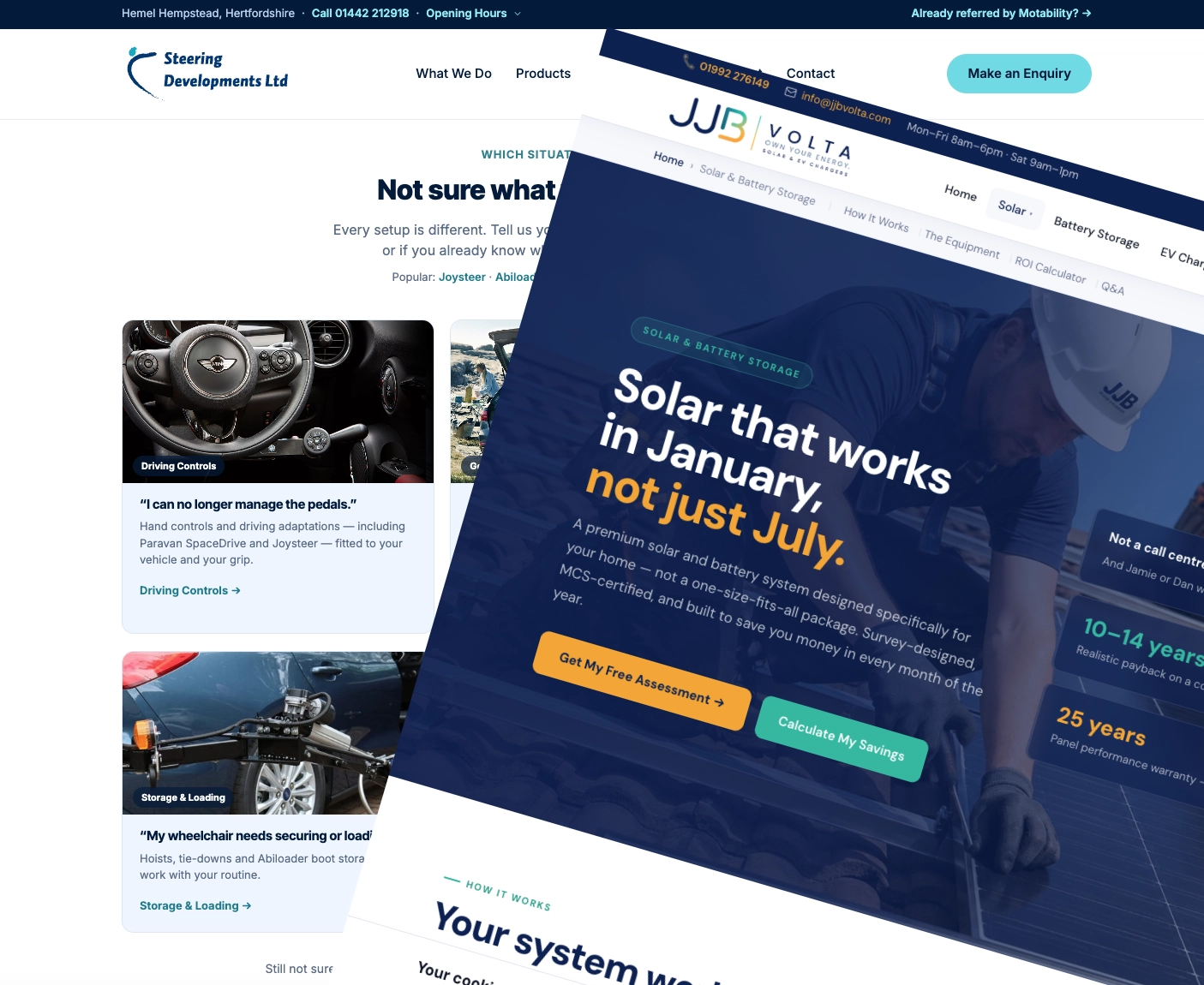
I never expected the Lockgate Method to power website building.
When I started developing the programme with small business clients several years ago, it was never in the plan. Yet I have now built several websites this way. In my experience they are quicker to build, cost far less, are easier for clients to run, and are often better than the agency sites they replace.
The reason is not the technology. It is what goes into it. This article explains what that is, and why the build now takes hours while the thinking still takes weeks.
It was never the plan
Lockgate starts with the owner's business and life goals, the real numbers, and customer truth: why customers choose you over the alternatives. Nothing downstream gets built until that is understood.
Websites came later. The evidence gathered in the early gates turned out to be exactly what a good site needs, and exactly what AI needs to build one well. The owner's goals come from Gate 1. The honest numbers come from Gate 2. Customer truth comes from Gate 3, through real conversations with real customers.
What has changed: the build is no longer the hard part
A website used to take weeks and cost small businesses thousands of pounds. With AI it takes hours and costs very little in comparison.
Clients can also update their own sites with a prompt. There is no ticket to an agency and no waiting for a quote to change a price or add a case study.
But AI builds exactly what it is told. A vague brief gives you a fast, polished site that sounds like every competitor. Speed is no longer the advantage. The brief is.
The three inputs a good website needs
A good brief rests on three things.
- Customer truth. The exact words your best customers use. Why they hired you. What nearly put them off.
- An identified demand profile (IDP). A real person with a real need to resolve, at a specific moment. Not an averaged persona.
- Honest numbers. What you can sell, at what margin, and to how many people.
Get these from real conversations and research, and the copy goes a long way to writing itself. Objections become your FAQ. The reason people hired you becomes your homepage promise, and then your case studies.
There is one catch. Gathering this evidence still takes weeks of real conversations. It should. It is often the work that was never done properly. Lockgate demands it and builds it up week after week.
That is the point of the gate structure. Lockgate makes sure the data that matters is collected, and each week builds on the last. By the time a client reaches Gate 5, they have everything needed to build the website and its copy in just a few hours: what they have learned, what they have agreed, and above all a deep understanding of demand and customer truth.
How the evidence becomes the website
Every major element of the site traces back to a piece of evidence. Nothing is written from the AI's imagination.
| Lockgate evidence | Website element it drives |
|---|---|
| Customers' exact phrases | Headlines and body copy |
| Why each client hired the owner | Hero promise and "why us" section |
| Objections raised in conversations | FAQ, page order, reassurance near the call to action |
| Ideal client and minimum viable sector | Who the site speaks to, and who it turns away |
| Field validation evidence and confidence | Which offers lead, which stay off the homepage |
| Repeat and referral rate, real client results | Proof: case studies and testimonials, used with consent |
| Owner manifesto and values | Tone, about page, trust signals |
| Gate 2 numbers and Gate 4 pricing | Offer and pricing pages |
| How best clients found the owner | Keyword brief and page structure |
A site the client owns, not a brochure
The build is more than a set of pages. Using Lockgate's own components and structures, Lovable sets up a content management system around the client's business and their customers.
- Content databases: products and services, case studies, comparison tables, FAQs and more. Each is a structured table the client can edit, so new content follows the same tested structure.
- Features that fit the business: clients add what suits them and their customers, such as a quote request, a booking form or a resource library, instead of a template's fixed feature set.
- Enquiry logging and custom forms: enquiries are captured in the client's own database, not lost in an inbox. The owner can see what customers ask for and feed it back into the next review.
- No separate hosting account: hosting is part of Lovable, with SSL included on every published URL. The client connects their own domain, which needs a paid plan. The database, sign-in and storage run on Lovable Cloud.
Two honest limits. Backend activity such as database work uses credits, so clients should budget for it. And someone still needs to be confident managing updates and the domain, which is part of the handover. (Lovable hosting docs)
A recent example: Steering Developments
Steering Developments was recently built with one of my clients. It took a little longer than a few hours, but not much. The extra effort was worth it: it included database work, a user-admin CMS and filtering options.
The evidence did the heavy lifting. The customer language, the products and the reasons people choose the business were already known before the first page was built. Now the work is about updates and ongoing SEO. JJBVolta was another site build to prove if we could capture demand based on the site and its messaging.
What comes next, and what to check
I expect AI to have a bigger impact on automating marketing. It will need the same thing the website needed: detailed truth from real people, real conversations and the right research. Tools change quickly. The evidence behind them does not.
Three checked facts about the tooling, as of November 2026:
- Search visibility depends on when the app was created. Apps created from 13 May 2026 use server-side rendering. Older apps are pre-rendered for verified crawlers only, and late-loading content can be missed.
- Keyword and competitor research is built in. It uses Semrush data, with no extra fees through 30 November 2026. Normal usage costs still apply, so check the position after that date.
- The built-in SEO review does not judge the words. It does not evaluate content quality or guarantee rankings. It can say a page is technically sound. It cannot say the page is persuasive. That is what customer truth is for.
Publishing is quick, but a new page can still take days or longer to appear in Google. (Lovable SEO docs)
Frequently asked questions
How long does it take to build a small business website with AI?
The build itself can take hours once the brief is ready. Gathering the evidence for that brief, through real customer conversations, takes weeks. A site with a database, a CMS and filtering takes somewhat longer than a few hours.
Can clients update the site themselves?
Yes. Clients update content with a prompt, or through the CMS the build sets up. Someone still needs to be confident managing updates and the domain.
Do I need a separate hosting account?
No. Hosting is part of Lovable, and SSL is included on every published URL. Connecting your own domain needs a paid plan.